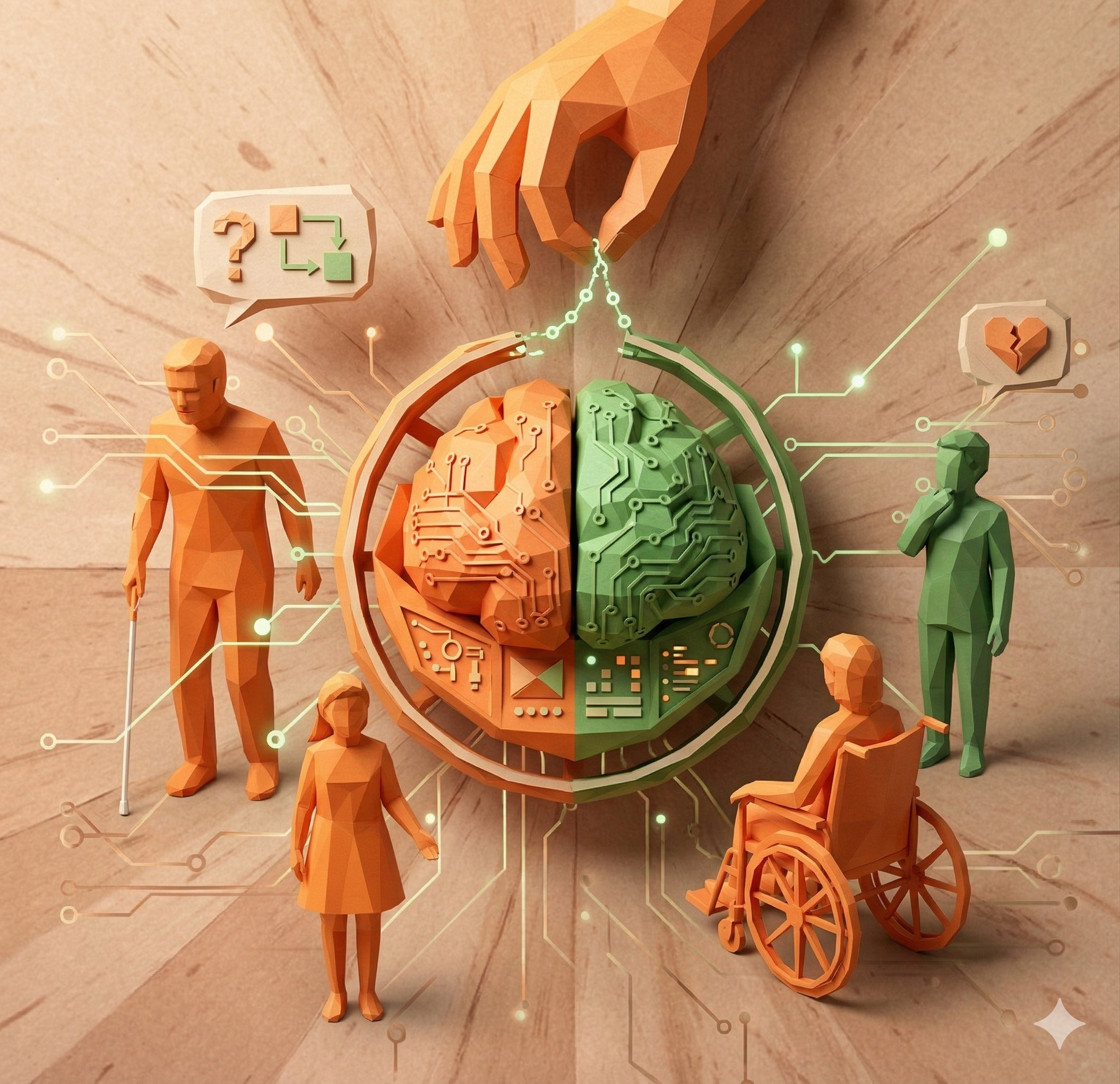
Disability Service Organizations
Nonprofits and service providers serving people with IDD, cerebral palsy, autism, MS, aging populations — where assistive technology, accessible AI, and staff adoption strategies are urgently needed.
Human-Centered Accessibility & AI Consulting
Adaptek is a boutique consultancy at the intersection of human-centered design, accessibility, and AI systems. We believe technology should adapt to the full range of human experience — not the other way around. Especially for people with disabilities.

Organizations invest in technology — AI tools, digital platforms, assistive systems — and watch adoption collapse or accessibility reviews fail. Not because the technology is wrong. Because it was designed for a fictional average user, not the real people who need to use it.
1 in 4
adults in the U.S. lives with a disability
Yet most technology — including AI — is still designed for the idealized, able-bodied, digitally fluent user.

Designed for the Wrong User
Most technology assumes the user is able-bodied, neurotypical, and digitally fluent. That describes a minority of the people who actually need it to work.
Accessibility as Afterthought
When accessibility is retrofitted after launch, it costs 3–10x more to fix — and still doesn't work as well as design that starts inclusive.
Adoption Without Readiness
Staff resist tools they don't trust, don't understand, or that weren't designed with their input. Behavioral readiness determines whether technology investment delivers value.
AI That Excludes at Scale
AI systems trained on narrow datasets and deployed without accessibility review amplify exclusion — at the speed and scale only AI can achieve.
Compliance Without Inclusion
Accessibility audits that chase WCAG checkboxes without addressing real user experience create legal coverage — not genuine access.
Two Vendors Where One Should Work
Accessibility consultants and AI engineers rarely coordinate. Adaptek exists because they must — and because we are both.
These failures are especially harmful in disability services, healthcare, and social impact organizations — where the stakes are human, not just operational.
We work best with mission-driven organizations where the people served — staff, clients, patients, communities — include people with disabilities, chronic conditions, or underserved backgrounds.
Nonprofits and service providers serving people with IDD, cerebral palsy, autism, MS, aging populations — where assistive technology, accessible AI, and staff adoption strategies are urgently needed.
Hospitals, clinics, and behavioral health providers deploying AI and digital tools for patients and providers — where accessibility, equity, and adoption all determine whether technology helps or harms.
Tech companies, e-commerce, and financial services organizations building AI products under ADA, WCAG, EU Accessibility Act, and EU AI Act requirements — who want genuine inclusion, not minimum compliance.
Mission-driven organizations deploying technology to diverse communities — where accessibility, language, cognitive ability, and trust are all part of whether the technology works.
Organizations serving Spanish-speaking communities in the U.S. or expanding into LATAM — where technology implementation delivered natively in English and Spanish reduces barriers and builds trust.
Most organizations must choose between an accessibility consultancy and an AI engineering firm. Adaptek is both — and the two work together on every engagement.
Know exactly what to fix — and in what order.
Design for real users — not the idealized average user.
Technology adoption that actually sticks.
AT that reaches everyone who needs it.
Build your team's capacity from the inside out.
AI that retrieves the right answer for every user.
Automation designed for diverse users.
Guardrails embedded — not patched on afterward.
WCAG compliance that actually works for real users.
A roadmap grounded in human impact — not hype.
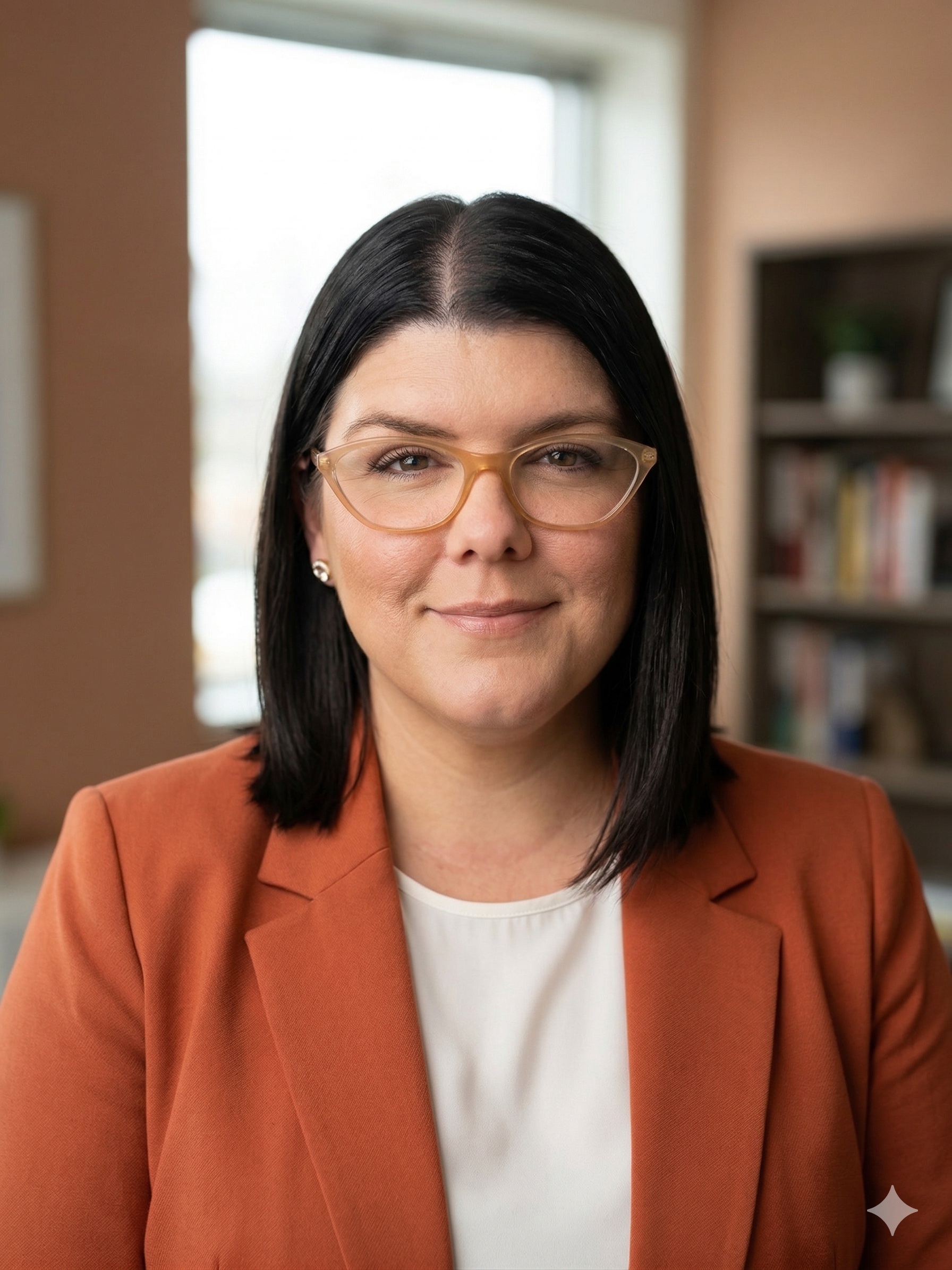
Vanessa Echandia co-founded Adaptek as a person living with multiple sclerosis. She doesn't consult on accessibility from a distance — she lives it, in every interaction with technology, every system that was and wasn't designed for her. That perspective is Adaptek's most irreplaceable asset. It is why our accessibility audits find what other audits miss. It is why our user testing is trusted by participants with disabilities. It is why organizations that serve people with disabilities choose us over generic technology consultants.

1 in 4
U.S. adults live with a disability
97%
of top websites fail WCAG accessibility standards (WebAIM 2024)
71%
of users with disabilities leave inaccessible websites immediately
A dignity-first daily assistant co-designed with people with intellectual and developmental disabilities — pilotable in one program, scalable across the network.
Reducing paperwork fatigue and AI anxiety for the frontline staff who make independence possible — framing AI as a helper, not a judge.
AI-assisted intake captures goals, abilities, and environments — suggesting the right AT tools and generating tailored training plans for specialists and families.
“Accessibility is never a checkbox for us. It's lived reality — and it's the starting point for every engagement, not an afterthought.”
Case studies focused on measurable human impact — not just system specifications.
500-bed Massachusetts hospital · 800 clinical staff · AI clinical documentation rollout
4-phase program: Behavioral Assessment → Leadership Training → All-Staff Rollout → Reinforcement
71%
Adoption at 6 months
vs. 34% projected without intervention
3.2
AI Anxiety Score
down from 6.8/10 pre-program
$28K
Investment
ROI-positive for client at Month 7
300-person company · $108K/year Copilot investment · only 23% active usage at Day 60
Culture audit + resistance mapping (3 distinct groups) · human-centered workshops · internal champions network
84%
Active usage at Day 90
up from 23% at Day 60
90
Days to result
vs. 12-month industry average
$22K
Investment
vs. $108K license at risk of abandonment
Regional health network · Clinical teams searching policies and protocols across 3 EHRs
RAG pipeline on clinical documentation · Guardrails + hallucination detection · Accessibility-first UI
30–40%
Reduction in search time
reported by clinical teams
95%
Answer accuracy rate
on validated clinical queries
$180K
Estimated annual ROI
from time savings across teams
Most organizations must choose between an accessibility consultancy and an AI engineering firm. Adaptek is both — and the two disciplines work together on every engagement.
| Capability | Adaptek | Generic AI Firms | Accessibility Consultancies | Big Consulting Firms |
|---|---|---|---|---|
| Accessibility Strategy & Auditing | limited | |||
| AI Systems Architecture & Build | ||||
| Disability-Informed Design | varies | |||
| Behavioral Readiness & Adoption | ||||
| Bilingual EN/ES Delivery | ||||
| Both Disciplines, Senior-Led |
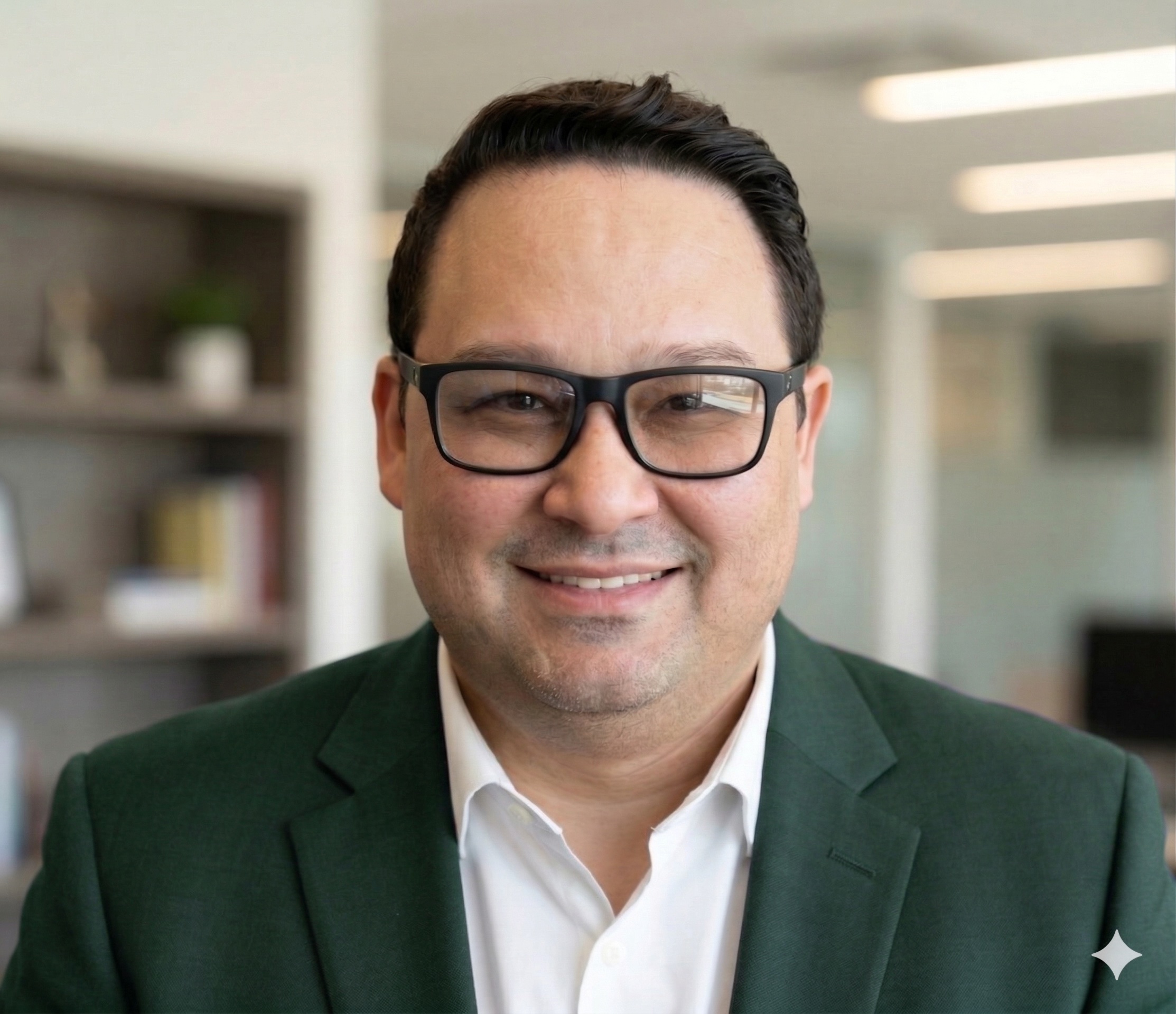
Vanessa's lived experience with MS and expertise in human-centered design, combined with Rafael's enterprise AI engineering background, creates a structural advantage no other boutique consultancy can replicate.
Adaptek was founded by a married couple whose professional expertise happens to form a complete, integrated discipline — accessibility and human-centered design on one side, AI systems architecture on the other.

Director, Human-Centered Design & Accessibility
Vanessa brings lived experience with multiple sclerosis, years of disability advocacy through the National MS Society, and graduate training in Cyberpsychology at Brandeis University. She leads Adaptek's human-centered design and accessibility practice — ensuring that technology is evaluated, designed, and implemented for the full range of human ability and experience.

Director, AI Systems Architecture
Rafael brings 10+ years of AI implementation leadership at Accenture — working with healthcare, government, and enterprise clients — and formal training in Human Systems Engineering. He leads Adaptek's AI systems architecture practice, designing and building responsible, accessible AI that is grounded in real human needs.
Start with a free 30-minute consultation. We'll listen to your situation, share honest thoughts, and — if there's a fit — suggest a low-risk entry engagement.
Tell us about your organization and what you're working on. We respond within 1 business day.